

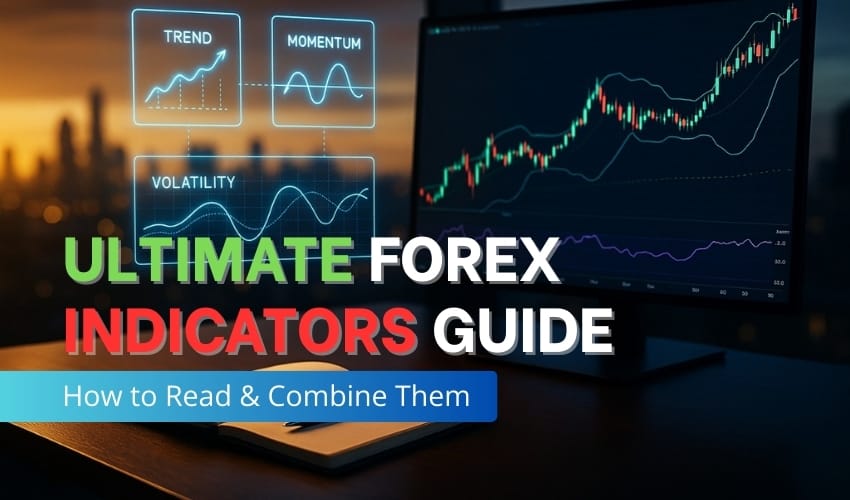
Ultimate Forex Indicators Guide: How to Read & Combine Them
Forex Indicators Guide for beginners: trend, momentum, volatility & support/resistance tools. Learn settings, signals, combos, and risk rules.
Learn to trade forex the right way — no premium paywall, no upsells, just straight-up education. Our free forex courses cover everything from reading candlestick charts for the first time to mastering risk management and building a complete trading strategy. Each lesson is written by traders who’ve been through the learning curve themselves.
Pick Your Starting Point:
| Step | Course | What You’ll Learn | Level |
|---|---|---|---|
| 1 | Forex Terminology | Pips, lots, leverage, spread — the language of forex | Beginner |
| 2 | Types of Charts | Line, bar, and candlestick charts explained | Beginner |
| 3 | Candlestick Patterns | Reading price action through candle formations | Beginner |
| 4 | Trends & Trend Lines | Identifying market direction with trend analysis | Beginner – Intermediate |
| 5 | Support, Resistance & Channels | Key price levels where trades happen | Intermediate |
| 6 | Chart Patterns | Head & shoulders, triangles, flags & more | Intermediate |
| 7 | Risk Management | Position sizing, stop losses & capital protection | All Levels |
| 8 | Trading Psychology | Emotions, discipline & the mental game | All Levels |
💡 Pro Tip: Don’t skip the boring stuff. Terminology, chart types, and risk management aren’t exciting — but traders who skip them always end up coming back to them after blowing an account. Do it right the first time.



Yes, 100% free. Every course and lesson on this page is completely accessible without paying anything. No hidden paywalls, no "premium upgrades" needed. We believe quality forex education shouldn't cost money — the market itself will teach you expensive lessons soon enough.
Start with Forex Terminology to learn the language, then move to Chart Types and Candlestick Patterns. After that, learn Trends & Trend Lines, followed by Support & Resistance. Once you're comfortable reading charts, study Chart Patterns and then move into Risk Management and Trading Psychology. The table above shows the recommended path.
Not at all. These courses start from absolute zero. If you don't know what a pip or a candlestick is, that's perfectly fine — the beginner courses explain everything from scratch. Most successful traders started exactly where you are now.
For most forex traders, start with technical analysis. It teaches you how to read charts, spot patterns, and time your entries — skills you'll use every single trading day. Fundamental analysis (economic data, interest rates, news events) adds context, but it's easier to learn once you already understand chart reading.
If you study 30 minutes to 1 hour daily, you can complete the core courses in 2 to 4 weeks. But learning forex isn't about rushing through content. Take your time, practice each concept on a demo account, and don't move to the next lesson until you truly understand the current one. Quality beats speed here.